In today’s hyper-competitive business landscape, a solid b2b marketing strategy isn’t just helpful—it’s essential. Whether you’re scaling a startup or optimizing an enterprise, mastering the right tactics can transform leads into loyal clients and revenue into sustainable growth.
B2B Marketing Strategy: Understanding the Core Principles

Before diving into tactics, it’s crucial to understand what sets B2B marketing apart from its B2C counterpart. Unlike consumer marketing, which often relies on emotion and impulse, B2B marketing is rooted in logic, relationships, and long-term value. A successful b2b marketing strategy focuses on solving complex business problems, building trust across multiple stakeholders, and delivering measurable ROI.
Defining B2B vs. B2C Marketing
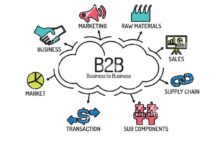
B2B (Business-to-Business) marketing involves selling products or services to other businesses, while B2C (Business-to-Consumer) targets individual customers. The decision-making process in B2B is typically longer, involves more stakeholders, and requires detailed justification. For example, a software company selling CRM tools to enterprises must convince not only the IT department but also finance, sales leadership, and procurement teams.
- B2B decisions are rational and data-driven.
- Sales cycles are longer and involve multiple touchpoints.
- Customer relationships are long-term and service-intensive.
In contrast, B2C marketing often leverages emotional triggers, shorter sales funnels, and mass appeal. Understanding this distinction is the first step in crafting an effective b2b marketing strategy.
The Role of Value Proposition in B2B
Your value proposition is the cornerstone of any b2b marketing strategy. It answers the critical question: “Why should a business choose you over a competitor?” A strong value proposition clearly articulates the unique benefits your product or service delivers—such as cost savings, efficiency gains, or competitive advantage.
According to McKinsey & Company, 74% of B2B buyers conduct more than half of their research online before engaging with sales. This means your value proposition must be visible, compelling, and consistent across all digital channels—from your website to LinkedIn and industry forums.
“In B2B, trust is the currency. Your marketing must earn it before the sale can happen.” — HubSpot
Conducting In-Depth Market Research for Your B2B Marketing Strategy
Without accurate market research, even the most creative b2b marketing strategy can fall flat. Market research helps you identify customer pain points, understand industry trends, and position your offerings effectively. It’s the foundation upon which every other marketing decision is built.
Identifying Your Ideal Customer Profile (ICP)
An Ideal Customer Profile (ICP) defines the characteristics of the businesses that benefit most from your solution. Unlike a buyer persona, which focuses on individual roles (e.g., CTO, procurement manager), an ICP looks at the organization as a whole—its size, industry, revenue, technology stack, and strategic goals.
For example, a SaaS company offering AI-powered analytics might define its ICP as mid-sized tech firms ($50M–$500M revenue) in North America using cloud infrastructure and seeking to improve data-driven decision-making. Tools like LinkedIn Sales Navigator and Crunchbase can help refine your ICP with real-time data.
- Company size (employees, revenue)
- Industry and niche specialization
- Geographic location
- Technology adoption level
- Pain points and business challenges
Mapping the B2B Buyer’s Journey
The B2B buyer’s journey consists of three stages: awareness, consideration, and decision. Each stage requires tailored content and engagement strategies as part of your b2b marketing strategy.
In the awareness stage, prospects realize they have a problem. Your content should focus on education—blog posts, infographics, and webinars that highlight common challenges. For instance, a cybersecurity firm might publish “5 Signs Your Company Is Vulnerable to Ransomware.”
During the consideration stage, buyers evaluate potential solutions. This is where case studies, comparison guides, and product demos become critical. A well-crafted case study showing a 40% reduction in downtime after implementing your software can be a powerful differentiator.
In the decision stage, prospects are ready to buy. Your messaging should emphasize trust, reliability, and ROI. Free trials, consultations, and testimonials from industry leaders can tip the scales in your favor.
“Buyers are now 57% of the way through the purchase decision before they even engage with sales.” — SiriusDecisions
Content Marketing as a Pillar of B2B Marketing Strategy
Content marketing is not just a tactic—it’s a strategic engine for lead generation, brand authority, and customer retention in B2B. Unlike flashy ads, content builds long-term equity by providing value before asking for anything in return.
Creating High-Value Educational Content
Top-performing B2B brands don’t sell; they teach. Educational content positions your company as a thought leader and helps prospects navigate complex decisions. This includes whitepapers, e-books, industry reports, and how-to guides.
For example, a financial services firm might publish a whitepaper titled “How Mid-Sized Manufacturers Can Optimize Cash Flow in 2024.” This content attracts qualified leads who are actively researching solutions, making them more receptive to your sales outreach.
According to Content Marketing Institute, 91% of B2B marketers use content marketing to reach customers, but only 42% have a documented strategy. A documented b2b marketing strategy increases consistency, alignment, and measurable outcomes.
Leveraging Case Studies and Customer Success Stories
Nothing builds credibility faster than real-world proof. Case studies demonstrate how your solution solved a specific problem for a real client. They should include:
- Client background and challenge
- Solution implemented
- Measurable results (e.g., “Reduced onboarding time by 60%”)
- Quotes from the client
Place case studies prominently on your website, in email campaigns, and during sales presentations. A study by Gartner found that 89% of B2B buyers say customer testimonials influence their purchasing decisions.
Account-Based Marketing (ABM): A Targeted B2B Marketing Strategy
Account-Based Marketing (ABM) flips traditional marketing on its head. Instead of casting a wide net, ABM focuses on a select group of high-value accounts and treats each as a market of one. This hyper-personalized approach is one of the most effective b2b marketing strategy models for enterprise sales.
How ABM Works in Practice
ABM starts with identifying strategic accounts—those with high revenue potential and alignment with your ICP. Then, marketing and sales teams collaborate to create personalized campaigns for each account.
For example, if you’re targeting a Fortune 500 retailer, your campaign might include:
- Customized landing pages with industry-specific messaging
- Personalized video messages from your CEO
- LinkedIn ads targeting key decision-makers
- Direct mail with a tailored business proposal
This level of personalization increases engagement and shortens sales cycles. According to ABM Institute, companies using ABM report 200% higher win rates and 50% faster sales cycles.
Aligning Sales and Marketing Teams for ABM Success
One of the biggest challenges in implementing a b2b marketing strategy like ABM is siloed teams. Sales and marketing must work in lockstep—sharing data, goals, and feedback.
Key alignment tactics include:
- Joint account planning sessions
- Shared KPIs (e.g., account engagement score)
- Regular sync meetings
- Shared CRM and marketing automation platforms
When sales and marketing are aligned, ABM campaigns achieve up to 3x higher ROI, according to Forrester Research.
Digital Channels and Automation in B2B Marketing Strategy
The digital transformation of B2B marketing has made automation and multi-channel engagement non-negotiable. A modern b2b marketing strategy must leverage technology to scale outreach, personalize experiences, and track performance.
Email Marketing: Still a Powerhouse in B2B
Email remains one of the highest ROI channels in B2B. But success depends on segmentation, personalization, and timing. A generic blast email has little impact. Instead, use behavioral data to send targeted messages.
For example:
- Send a nurture sequence to leads who downloaded a whitepaper
- Trigger a demo offer after a prospect watches a product video
- Re-engage inactive contacts with a “We miss you” campaign
Tools like HubSpot and Marketo enable sophisticated email workflows that align with the buyer’s journey.
LinkedIn and Social Selling
LinkedIn is the #1 platform for B2B marketing. With over 900 million users, including 63 million decision-makers, it’s the ideal place to build relationships, share content, and generate leads.
Social selling—using social media to build trust and influence buyers—is now a core component of any b2b marketing strategy. Sales reps who use social selling are 51% more likely to meet their quotas, per LinkedIn’s 2022 Social Selling Report.
Effective tactics include:
- Sharing insightful articles and commentary
- Engaging with prospects’ posts
- Using LinkedIn InMail for personalized outreach
- Joining and contributing to industry groups
Measuring Success: KPIs and Analytics in B2B Marketing Strategy
A b2b marketing strategy without measurement is like sailing without a compass. You need clear KPIs to evaluate performance, optimize campaigns, and justify marketing spend.
Key Performance Indicators (KPIs) for B2B
Not all metrics are created equal. Focus on KPIs that reflect real business impact:
- Lead Conversion Rate: Percentage of leads that become customers
- Customer Acquisition Cost (CAC): Total marketing and sales cost per new customer
- Customer Lifetime Value (CLV): Total revenue expected from a customer over time
- Marketing Qualified Leads (MQLs): Leads deemed ready for sales follow-up
- Return on Ad Spend (ROAS): Revenue generated per dollar spent on ads
Tracking these metrics helps you identify what’s working and where to pivot.
Marketing Attribution Models
Attribution answers the question: “Which marketing efforts actually drove the sale?” In B2B, where the buyer’s journey spans months and multiple touchpoints, attribution is complex.
Common models include:
- First-Touch: Credits the first interaction (e.g., a Google ad click)
- Last-Touch: Credits the final action before conversion (e.g., a demo request)
- Multi-Touch: Distributes credit across all touchpoints (e.g., webinar, email, case study)
For a comprehensive view, use a multi-touch model. Platforms like Google Analytics 4 and Salesforce offer advanced attribution tools to refine your b2b marketing strategy.
Scaling and Optimizing Your B2B Marketing Strategy
Once your b2b marketing strategy is delivering results, the next step is scaling. This means expanding reach, improving efficiency, and continuously optimizing based on data.
Investing in Marketing Technology (MarTech)
The right MarTech stack can automate repetitive tasks, enhance personalization, and provide real-time insights. Essential tools include:
- CRM (e.g., Salesforce, HubSpot)
- Marketing Automation (e.g., Marketo, Pardot)
- Content Management System (e.g., WordPress, HubSpot CMS)
- Analytics and Reporting (e.g., Google Analytics, Tableau)
- ABM Platforms (e.g., 6sense, Terminus)
Integration between these tools ensures data flows seamlessly, enabling smarter decisions and faster execution.
Continuous Testing and Optimization
Even the best b2b marketing strategy must evolve. Use A/B testing to refine email subject lines, landing page copy, ad creatives, and CTAs. Small improvements compound over time.
For example, changing a CTA from “Learn More” to “Get Your Free Assessment” increased conversion rates by 32% in a Optimizely case study. Always test one variable at a time to isolate impact.
Additionally, conduct quarterly strategy reviews to assess performance, gather feedback, and set new goals. Agility is key in a fast-changing B2B landscape.
What is the most important element of a b2b marketing strategy?
The most important element is alignment—between marketing and sales, between messaging and customer needs, and between tactics and business goals. Without alignment, even the most creative campaigns fail to deliver results.
How long does a typical B2B sales cycle last?
B2B sales cycles vary by industry and complexity but typically range from 1 to 12 months. High-value enterprise deals often take 6–9 months, while SaaS subscriptions may close in 1–3 months.
Can small businesses use ABM effectively?
Absolutely. While ABM is often associated with enterprise companies, small businesses can apply “light” ABM by focusing on 5–10 high-potential accounts with personalized outreach. It’s about quality, not quantity.
Is SEO important for B2B marketing?
Yes, SEO is critical. Over 80% of B2B buyers start their journey with a search engine. Optimizing your website for keywords like “best CRM for mid-sized businesses” can drive high-intent traffic and generate qualified leads.
How do I measure the ROI of my b2b marketing strategy?
Calculate ROI by subtracting marketing costs from revenue generated, then dividing by marketing costs. For example: ($500,000 revenue – $100,000 marketing spend) / $100,000 = 400% ROI. Use CRM and analytics tools to track attribution accurately.
A winning b2b marketing strategy combines deep customer insight, strategic content, targeted outreach, and data-driven optimization. By understanding the buyer’s journey, aligning sales and marketing, and leveraging digital tools, businesses can build sustainable growth. The key is consistency, measurement, and a relentless focus on delivering value. Whether you’re just starting or scaling up, the principles outlined here provide a proven roadmap to B2B marketing success.
Further Reading:
